


25/11/2026
Zaheer Mohammed
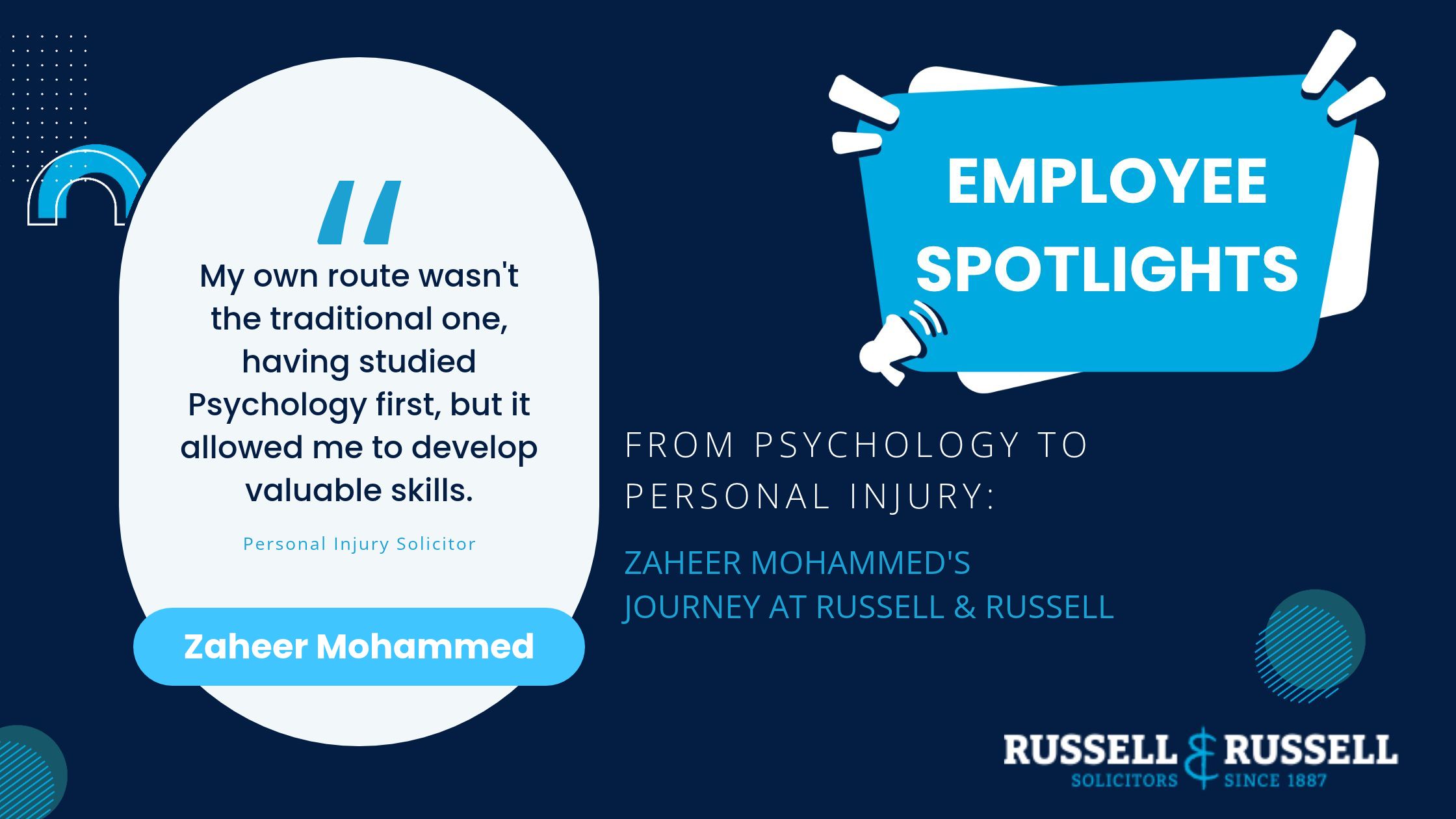
Meet our personal injury team
At Russell & Russell, our personal injury team helps people rebuild after an accident that wasn’t their fault. In our latest spotlight, we meet Zaheer Mohammed, a personal injury solicitor who came to law through a slightly different route, bringing a background in psychology and a genuine focus on the people behind every claim.
Zaheer joined the firm in March 2026 and works across a broad range of personal injury matters. We sat down with him to talk about his route into law, how he supports clients through the claims process, his advice for anyone thinking about making a claim, and a little more about him outside of work. Here is what he had to say.
Meet Zaheer
What is your role in the personal injury team, and what does a typical day look like for you?
I’m a PI Solicitor. My role involves managing a caseload of claimant personal injury matters, which includes liaising with clients and insurers, and drafting and negotiating settlements.
How long have you worked with the firm, and what made you want to work in personal injury?
I joined in March 2026. I chose personal injury work because it gives me the opportunity to work closely with clients and support them through the claims process. Since joining the profession, I have worked on a wide range of cases involving different types of accidents, which has helped me develop my experience and keeps the work interesting and rewarding.
What was your route into law?
I came to law through a career change. I completed a BSc in Psychology followed by a master’s degree in Developmental Psychology before deciding to pursue a career in law. I then completed the Graduate Diploma in Law (GDL) and the Legal Practice Course (LPC), which set me on the path to becoming a solicitor.
Zaheer’s Specialist Areas
Which areas of personal injury do you work in, and what drew you to them?
I work across a broad range of personal injury matters, including Employers’ Liability (EL), Public Liability (PL), Occupiers’ Liability (OL), Criminal Injuries Compensation Authority (CICA) claims, and Road Traffic Accident (RTA) claims. I enjoy the variety of cases.
What happens when a new client first gets in touch with you? Walk us through the first few steps.
The first step is discussing the details of the accident with the client, including how it happened, the injuries they have suffered, and any supporting evidence they may have. This enables me to assess the potential claim and explain how we can help move matters forward.
How do you help clients get the medical treatment, rehabilitation or practical support they need while their claim is ongoing?
I encourage clients to seek advice and treatment from their GP, especially if they require physiotherapy or psychological support. As part of their claim, we also arrange an independent medical examination to assess their injuries, and we then arrange further examinations if required.
Without naming anyone, tell us about a case you are particularly proud of and why it stayed with you.
One case that has always stuck with me was transferred to me when it was close to being closed. I took the time to go through the file and medical evidence in detail, and in doing so I identified some causation issues that I felt could be addressed with further investigation. After obtaining additional evidence, I was able to move the claim forward and ultimately secure a successful settlement for the client.
Advice for Clients Making a Claim
If someone has just been injured in an accident that wasn’t their fault, what are the first things you would tell them to do?
The first thing I would advise is to seek medical attention and ensure their injuries are properly assessed and treated. I would also recommend that they gather and keep any evidence they have.
What evidence or information should people keep hold of to help their claim?
Photographs of the accident scene, details of any witnesses, accident reports, and records of any expenses they have incurred. Some of these guides on our dedicated personal injury website might help: The Steps to Take Following a Public Transport Accident, Guide To Cycling in Autumn – A Guide to Road Safety and Accident Claims, What should I do if something goes wrong with my healthcare?, The Steps to Take Following an Accident at Work.
How would you explain No Win No Fee to someone who has never made a claim before?
I would explain that a No Win No Fee agreement means they can pursue a claim without worrying about paying legal fees upfront. If the claim is unsuccessful, they won’t pay our legal fees. If the claim succeeds, an agreed deduction is made from their compensation, and I always make sure clients understand this before signing them up.
What is one thing you wish more people knew before they started a claim?
Knowing the limitation period, preserving evidence and seeking medical attention early.
What should someone look for when choosing a solicitor to handle their injury claim?
I would recommend looking for someone who has the experience and is approachable and friendly.
A Moment That Stayed with Him
Without naming anyone, tell us about a moment with a client that reminded you why you do this job.
A client, a single mother who was going through some financial difficulties, had sustained an injury and was very happy with the outcome of her settlement. What stayed with me most was how grateful and relieved she was, knowing it would help ease some of the financial pressure she had been facing.
A Bit More About Zaheer
What do you enjoy doing outside work?
I love spending time with family and friends, and travelling.
Are you involved in any community or charity work?
Not at the moment, but I was involved in charity work before, at a soup kitchen.
What is one thing your colleagues might not know about you?
I love to read.
Advice for a Career in Law and Personal Injury
What advice would you give someone thinking about a career in law?
I would advise gaining experience. My own route wasn’t the traditional one, having studied Psychology first, but it allowed me to develop valuable skills.
What skills or qualities make someone good at personal injury work?
Being hardworking, thorough and detail-oriented.
What do you wish you had known when you were starting out?
How important it is to plan and prioritise your workload effectively.
What is the most rewarding part of working in personal injury?
Achieving successful settlements for clients.
What has helped you most in your own career development?
My supervisors and colleagues, who have assisted and guided me.
Quick-Fire Round
Tea or coffee? Tea
Best piece of advice you’ve been given? Live in the moment
Favourite local spot? Kohi Cafe
Favourite subject at school? History
Find Out More About Careers at Russell & Russell
It’s those who think ahead, plan well and react positively to change who are the ones that thrive and prosper. Here at Russell & Russell, we think that to do that, you have to have the right team in place. The right people drive our business forward, not only to meet the challenges we face as a collective, but also to make our firm stronger. Is this you? If you think you’ve got what it takes, we’d be interested to hear from you. To ask about opportunities or career opportunities at Russell & Russell, visit our vacancies page, or get in touch.
Please note that this article is meant as general guidance and not intended as legal or professional advice. Updates to the law may have changed since this article was published.